Ceramic coating protects vehicle paint from ultraviolet (UV) radiation and oxidation by bonding at a molecular level with the clear coat to form a rigid, hydrophobic nano-barrier. This silica-based shield absorbs and reflects intense solar radiation while preventing oxygen, moisture, and environmental contaminants from reaching the underlying paint layers. As a result, the chemical reactions that cause clear coat breakdown, chalking, and paint fading are neutralized before they can begin.
Understanding the Science Behind UV Radiation and Paint Oxidation
To understand how ceramic coatings preserve a car’s exterior, it helps to examine what occurs when factory paint encounters direct sunlight. Modern vehicle finishes consist of three distinct layers: a primer, a base color coat, and an outer clear coat. That clear coat is an organic polymer engineered to add depth and shield the pigmented paint below. However, organic chemical bonds inherently break down under continuous solar radiation.
Sunlight carries two primary spectrums of radiation that degrade automotive finishes:
- UVA Rays (315–400 nm): Long-wave radiation that penetrates deep into the clear coat, breaking down resin structures over time.
- UVB Rays (280–315 nm): High-energy short-wave radiation that causes surface-level thermal degradation and bond breakage.
When ultraviolet photons strike the panel, they excite the chemical bonds in the clear coat. This process, known as photo-oxidation, creates free radicals, unstable molecules that sever the polymer chains in the paint. As these chains fracture, the clear coat loses its elasticity, clarity, and structural bond strength.
In coastal environments like Clearwater, high temperatures and salt-laden humidity accelerate this degradation. Free oxygen molecules in the air bond with the weakened paint polymer, triggering oxidation. Unchecked oxidation turns a smooth finish into a dull, chalky surface, eventually causing premature clear coat failure, peeling, and metal corrosion.
Vehicle owners across the region rely on professional ceramic coating in St. Petersburg, FL to keep their clear coat shielded from this continuous cycle of solar heat and humidity.
How Nano-Ceramic Coatings Form a Molecular Barrier
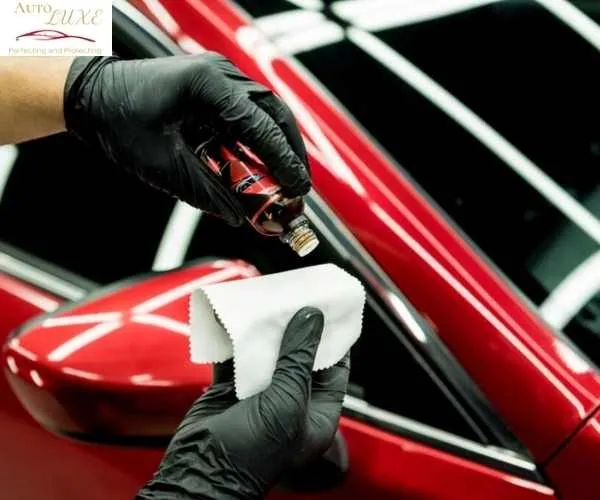
Unlike traditional car waxes or synthetic sealants that sit loosely on top of paint, liquid ceramic coatings utilize nanotechnology. Formulated primarily with silicon dioxide (SiO2) or silicon carbide (SiC), ceramic coatings consist of microscopic particles ranging from 1 to 100 nanometers in size.
When applied to a clean paint surface, these nano-particles settle into the microscopic pores, valleys, and surface indentations inherent to factory clear coats. Through a curing process, the liquid polymer forms a permanent or semi-permanent covalent bond directly with the paint.
This covalent bond fundamentally changes the outer surface properties:
- Crystalline Hardness: The nano-structure cures into a quartz-like glass structure measuring up to 9H on the pencil hardness scale.
- Sacrificial Layer: The ceramic matrix acts as an external shield. Environmental hazards strike the inert silicon dioxide layer rather than the underlying clear coat.
- Non-Reactive Matrix: Silicon dioxide is chemically inert; oxygen molecules cannot react with it, halting oxidation before it starts.
Investing in St. Petersburg ceramic coating applications ensures the vehicle’s paint is fortified with a dense molecular grid before solar exposure can cause microscopic damage.
The Mechanics of UV Ray Reflection and Absorption
A clear coating blocks invisible solar energy through two core physical mechanisms: light refraction and UV absorption.
1. Refractive Light Deflection
Because of the dense crystalline lattice formed by nano-silica, ceramic coatings alter the surface’s refractive index. Incoming solar radiation does not pass directly through to the clear coat; instead, a major portion of the light wave is deflected and dispersed across the smooth ceramic outer surface.
2. Embedded UV Stabilizers
Professional ceramic formulations integrate inorganic UV absorbers and light stabilizers. These additives capture high-energy UV radiation and safely dissipate it across the surface panel as low-level thermal energy. By converting these destructive wave frequencies, the coating prevents energy from reaching the delicate chemical bonds of the base color coat.
Stopping Oxidation: Sealing Paint From Oxygen and Moisture
Oxidation requires three elements: oxygen, heat, and moisture. Removing any one of these factors dramatically slows the chemical breakdown of the paint. A nano-ceramic coating seals the paint structure away from moisture and oxygen entirely.
Extreme Hydrophobicity
Ceramic coatings produce a water contact angle between 100° and 115°, creating a hydrophobic surface. Water cannot lie flat on the panel; it beads into tight droplets that roll off immediately under gravity or airflow.
As these water beads slide off, they carry away airborne dust, acid rain residues, and industrial fallout, preventing contaminants from sitting on the panel where they would otherwise catalyze oxidation.
Environmental Sealing
Whether parked along the coastline in Clearwater or commuting through central St. Petersburg, FL, vehicles face constant airborne salt and industrial emissions. Ocean salt speeds up oxidation by conducting electrical charges that accelerate rust and clear coat decay. A sealed ceramic layer prevents salt air, mineral spots, and organic contaminants from etching into the clear coat.
Drivers who choose professional ceramic coating in St. Petersburg benefit from this sealed surface barrier, keeping daily environmental fallout off the factory finish.
Precision Application: The Key to Durability and Performance
Achieving multi-year protection against solar heat and oxidation requires precise prep work and controlled application techniques.
At Auto Luxe, every vehicle is handled by our dedicated team made up of seasoned professionals. By bringing years of experience, care and precision, integrity and enhancing the performance, we deliver unmatched durability and shine. Our expert team operates with excellence and meticulous attention to detail, guaranteeing that the chemical bond cures uniformly across every panel.
A high-grade ceramic application follows a structured, multi-stage process:
- Decontamination Wash & Chemical Iron Removal: Stripping embedded iron filings, tar, and traffic film that interfere with covalent bonding.
- Multi-Stage Paint Correction: Utilizing machine polishers to eliminate swirl marks, micro-scratches, and existing surface haze. Sealing an unpolished panel permanently locks in visual defects.
- Isopropanol Panel Wipe: Removing remaining polishing oils to expose bare clear coat for maximum chemical adhesion.
- Controlled Hand Application: Manually applying and leveling the nano-coating across individual panels to ensure uniform thickness and optical clarity.
- Targeted Curing: Allowing the cross-linking process to solidify under controlled temperature conditions, optimizing the final hardness and gloss.
Wax vs. Paint Sealants vs. Nano-Ceramic Coating
Comparing protection methods clarifies why nano-ceramic technology is the standard for long-term vehicle preservation.
| Protective Method | Primary Composition | Thermal Limit | UV Resistance | Expected Lifespan |
| Carnauba Wax | Natural organic palm wax | ~160°F | Minimal / Short-term | 4 to 8 Weeks |
| Synthetic Sealant | Polymer resins | ~200°F | Moderate | 4 to 6 Months |
| Nano-Ceramic Coating | Silicon Dioxide (SiO2) / SiC | ~1,000°F+ | High / Permanent Barrier | 2 to 7+ Years |
Natural carnauba waxes degrade quickly under direct heat, where vehicle hood temperatures routinely exceed 170°F in summer. Ceramic coatings withstand extreme thermal thresholds without breaking down, maintaining consistent UV protection year-round.
People Also Ask
How long does ceramic coating protect against UV rays?
A professionally applied nano-ceramic coating provides continuous UV defense ranging from 2 to over 7 years, depending on the specific product formulation and maintenance routine. Unlike traditional waxes that break down within weeks under high heat, ceramic coatings form permanent covalent bonds that do not melt or wash away easily.
Can ceramic coating reverse paint oxidation that has already occurred?
No, ceramic coatings cannot fix existing oxidation. Because ceramic coatings are transparent, applying one over oxidized, chalky paint will simply seal the damage underneath. Pre-existing oxidation must be removed through professional paint correction and compounding before applying a ceramic coating to restore shine and seal the finish.
Does ceramic coating reduce heat damage on vehicle body panels?
Yes. By reflecting and scattering UV radiation and infrared energy, ceramic coatings help dissipate surface heat buildup across metal and carbon fiber panels. This thermal stability protects the paint from expanding and contracting rapidly, which prevents clear coat micro-cracking over time.
How often should a ceramic coating be maintained to preserve UV protection?
To ensure the UV-blocking matrix remains fully effective, perform a neutral-pH wash every 2 to 3 weeks and apply a ceramic booster spray every 6 to 12 months. Routine maintenance removes surface debris that could mask the coating’s hydrophobic properties and reduces exposure to harsh contaminants.
Experience Elite Vehicle Care with Auto Luxe
Your automobile represents a significant investment that deserves long-term care and protection. At Auto Luxe, we provide high-end, professional results paired with personalized service for every client.
Our facility utilizes premium ceramic formulations and precise application methods to protect your vehicle from solar radiation, salt air, and chemical oxidation. Maintain a deep, high-gloss finish that stands up to harsh environmental exposure season after season.
Protect your vehicle’s paint and preserve its value. Explore our specialized Auto Luxe Ceramic Coating Services and contact us today.